
The PICMG standards, explained
The PCI Industrial Computer Manufacturers Group is the consortium that has written industrial computing's open standards since 1994: from CompactPCI to Computer-on-Modules. This page is the map — each family has its own guide.
What PICMG is: the standard before the product
PICMG is a manufacturers' consortium born in 1994 to adapt the PCI bus to industrial computing: since then it has written open specifications joined by hundreds of companies — AdvancedTCA alone involved over one hundred.
The model's value is interoperability: an open specification defines mechanics, electricals and management, and products from different brands coexist in the same system. It is the condition that makes COTS possible — buying from a catalog instead of developing — and that protects investments when a supplier changes course.
The families cover three scales: board systems — CompactPCI and its serial successor — for control and acquisition; carrier-grade platforms — AdvancedTCA and MicroTCA — for telecom and big physics; Computer-on-Modules — COM Express and COM-HPC — for those who design the system around a module. Plus PICMG 1.x, which separates the CPU from the backplane in industrial PCs.
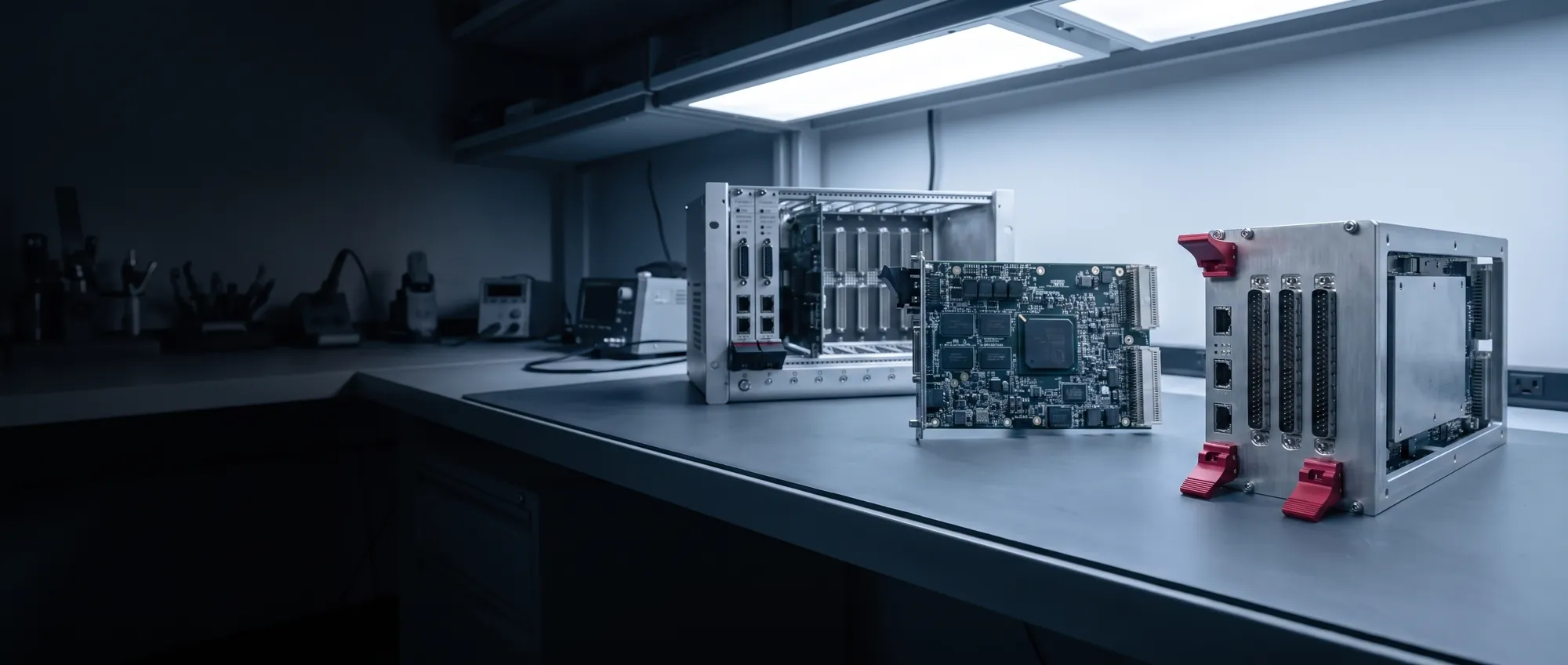
The service: custom platforms and microracks How the engineering team works
What the specification says
The families, item by item
Each item has its own page: this is the map.6 entries
PICMG 1.x
SHBs and passive backplanes
The CPU on a removable board, the slots on a passive backplane: the industrial PC repaired by swapping a board, from 1.0's PCI/ISA to 1.3's PCIe.
PICMG 2.x
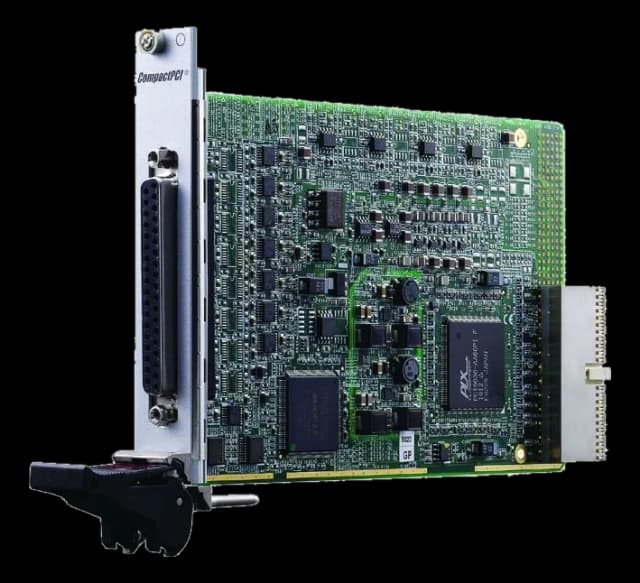
CompactPCI · 1995
PCI on the Eurocard with 2 mm connectors and hot swap; the family reaches backplane Ethernet (2.16) and the PlusIO serial bridge (2.30).
CPCI-S.0
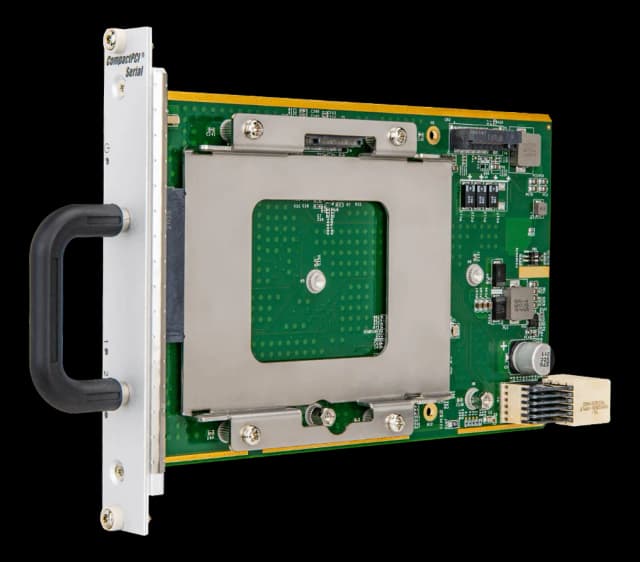
CompactPCI Serial · 2011
The same 19″ mechanics, serial-only connections: PCIe, SATA, USB and Ethernet in a star over eight peripherals, full mesh for multiprocessing.
PICMG 3.0
AdvancedTCA · 2002
Carrier grade as a standard: 8U blades, redundant -48 VDC power, dual star or full mesh fabrics, shelf management via IPMI.
MTCA.0
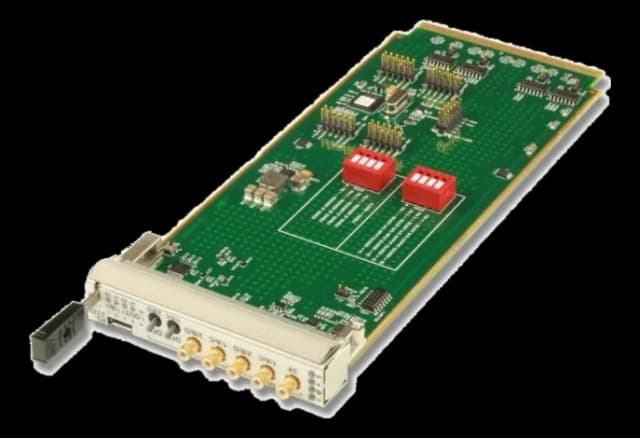
MicroTCA · 2006
AMC mezzanines promoted to mini-blades in a compact chassis: ATCA at reduced scale, with rugged variants up to physics' MTCA.4.
COM.0 · COM-HPC
Computer-on-Module · 2005 and 2021
Computing as a component: COM Express for the PCIe generation, COM-HPC for 800-pin edge servers. The OEM designs the system, on the carrier.
The specifications, in a table
Thirty years of open standards, three system scales.1 tables
The timeline
The PICMG specifications covered on these pages.
| Specification | Year | What it defines |
|---|---|---|
| PICMG 1.0 | 1994 | SBC and passive PCI/ISA backplane |
| PICMG 2.0 | 1995 | CompactPCI: PCI on the Eurocard |
| PICMG 3.0 | 2002 | AdvancedTCA: carrier-grade blades |
| COM.0 | 2005 | COM Express: computing as a module |
| PICMG 1.3 | 2005 | SHB Express: the backplane moves to PCIe |
| MTCA.0 | 2006 | MicroTCA: AMCs as mini-blades |
| CPCI-S.0 | 2011 | CompactPCI Serial: the serial star |
| COM-HPC | 2021 | The server-class Computer-on-Module |
Where PICMG standards work
From automation to telecom, wherever multi-vendor is a requirement.

The PICMG families, page by page
The guides to the consortium's standards.

Let's talk about your project
Phone and email go straight to our technical sales team in Turin: the first answer is already a technical one.