
The CompactPCI Serial architecture, explained
PICMG CPCI-S.0: the CompactPCI that leaves the parallel bus for serial point-to-point connections — PCI Express, SATA, USB, Ethernet — on proven 19″ mechanics. Here you find the standard, the topology and the catalog.
What CompactPCI Serial is: the star without switches
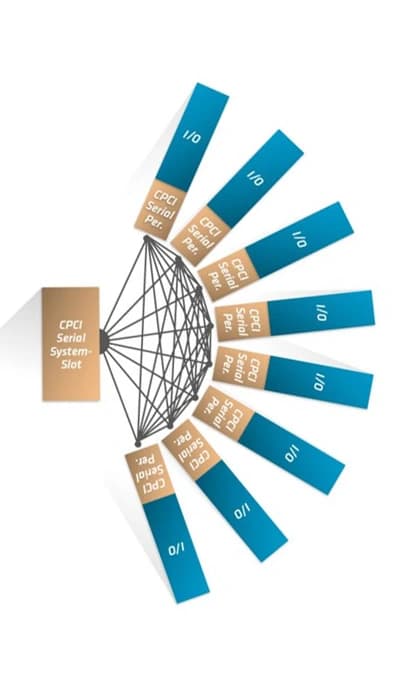
CompactPCI Serial updates the CompactPCI architecture with high-speed serial interconnects: in a star configuration one system slot serves up to 8 peripheral boards with no bridges or switches.
The system slot — normally a complete single board computer — provides 8 PCI Express links, 8 SATA/SAS, 8 USB 2.0/3.0 and 8 Ethernet interfaces, plus management signals. Ethernet is normally configured as a full mesh: the pin assignment of system and peripheral slots is congruent, so a system board can plug into any peripheral slot and run symmetrical multiprocessing with up to 9 CPUs — without bridges or special backplanes. For the redundant, safety-critical systems of mil/aero, transportation and medical.
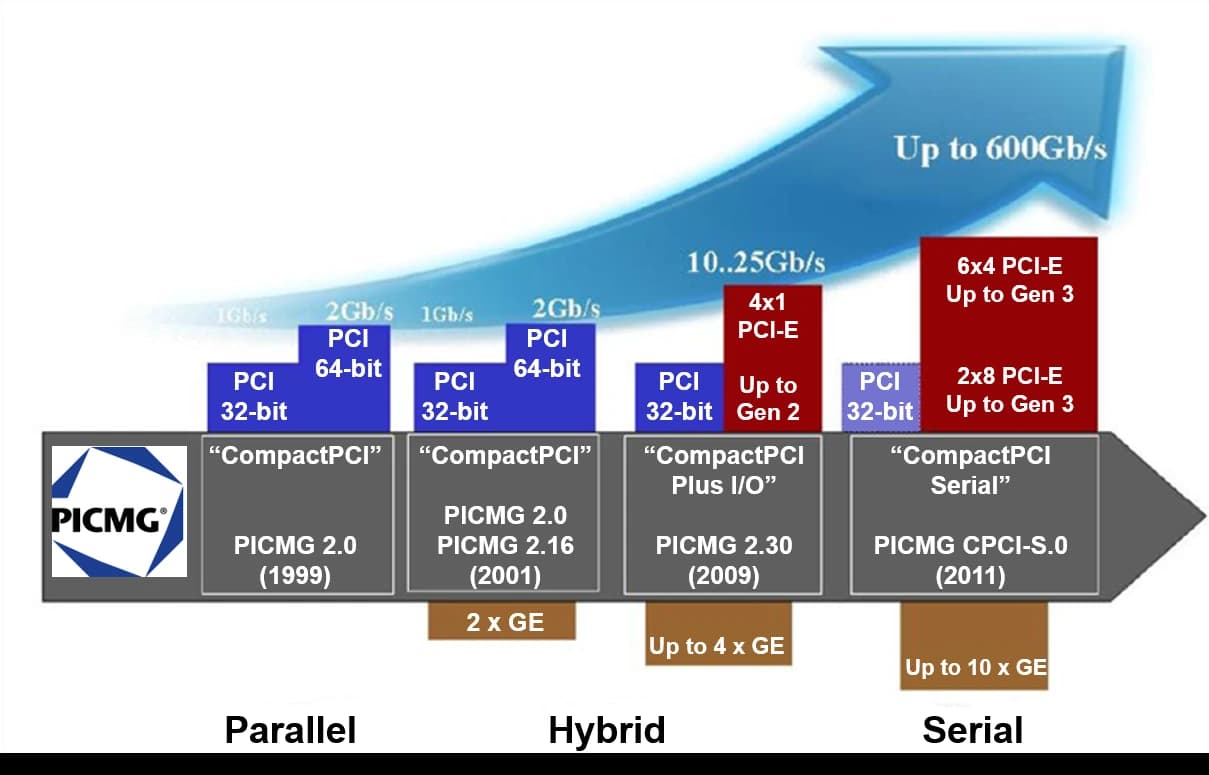
Adopted by PICMG as CPCI-S.0 in March 2011, the specification keeps the 19″ mechanics of the IEC 1101 family — the same as CompactPCI and VME — and hot swap. The new high-density connector reaches 184 pin pairs on 3U with 12 Gb/s transmission frequencies: free pins become customized rear I/O on peripheral boards.
The service: custom platforms and microracks How the engineering team works
What the specification says
The three pillars, item by item
The star, the connector and the kinship with the parallel family.3 entries
CPCI-S.0
The base specification · PICMG 2011
One system slot, up to eight peripherals, congruent pin assignment and equal-priority slots: PCI Express, SATA/SAS and USB in a star, full mesh Ethernet. Two peripheral slots get 8-lane PCIe links (fat pipes).
AirMax
The high-density connector
Developed for harsh environments: up to 184 pairs on 3U, 12 Gb/s and beyond. Compared to CompactPCI, plug and receptacle are swapped — the receptacle sits on the backplane, as in VME: twisted backplane pins become a memory, and the crossing wall prevents insertion into a classic CompactPCI slot.
IEC 1101
The mechanics that do not change
The 19″ proven by CompactPCI and VME: card cage, guides, face plates, 4HP pitch. The transition from parallel goes through PICMG 2.30 PlusIO, which anticipates the same serial interfaces on the J2 connector.
The interfaces, in a table
What comes out of the system slot and what reaches each peripheral.1 tables
System slot and peripheral slot
From the specification table.
| Interface | System slot | Peripheral slot |
|---|---|---|
| PCI Express | 6 x4 links + 2 x8 links (fat pipes) | 1 link, up to x8 |
| SATA/SAS | 8 channels | 1 channel |
| USB 2.0 | 8 channels | 1 channel |
| USB 3.0 | 8 channels | 1 channel |
| Ethernet 10GBASE-T | 8 channels | up to 8 channels (full mesh) |

The CompactPCI Serial catalog starts here
CompactPCI Serial
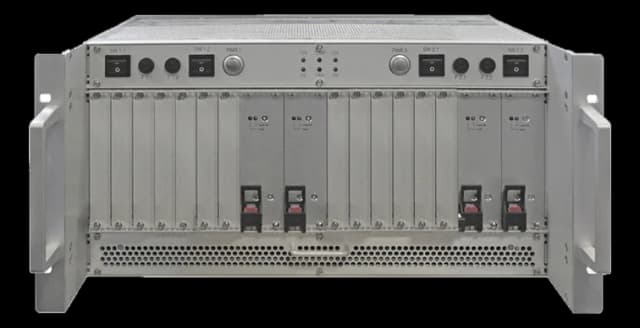
CompactPCI Serial
CompactPCI Serial power supplies
Where CompactPCI Serial works
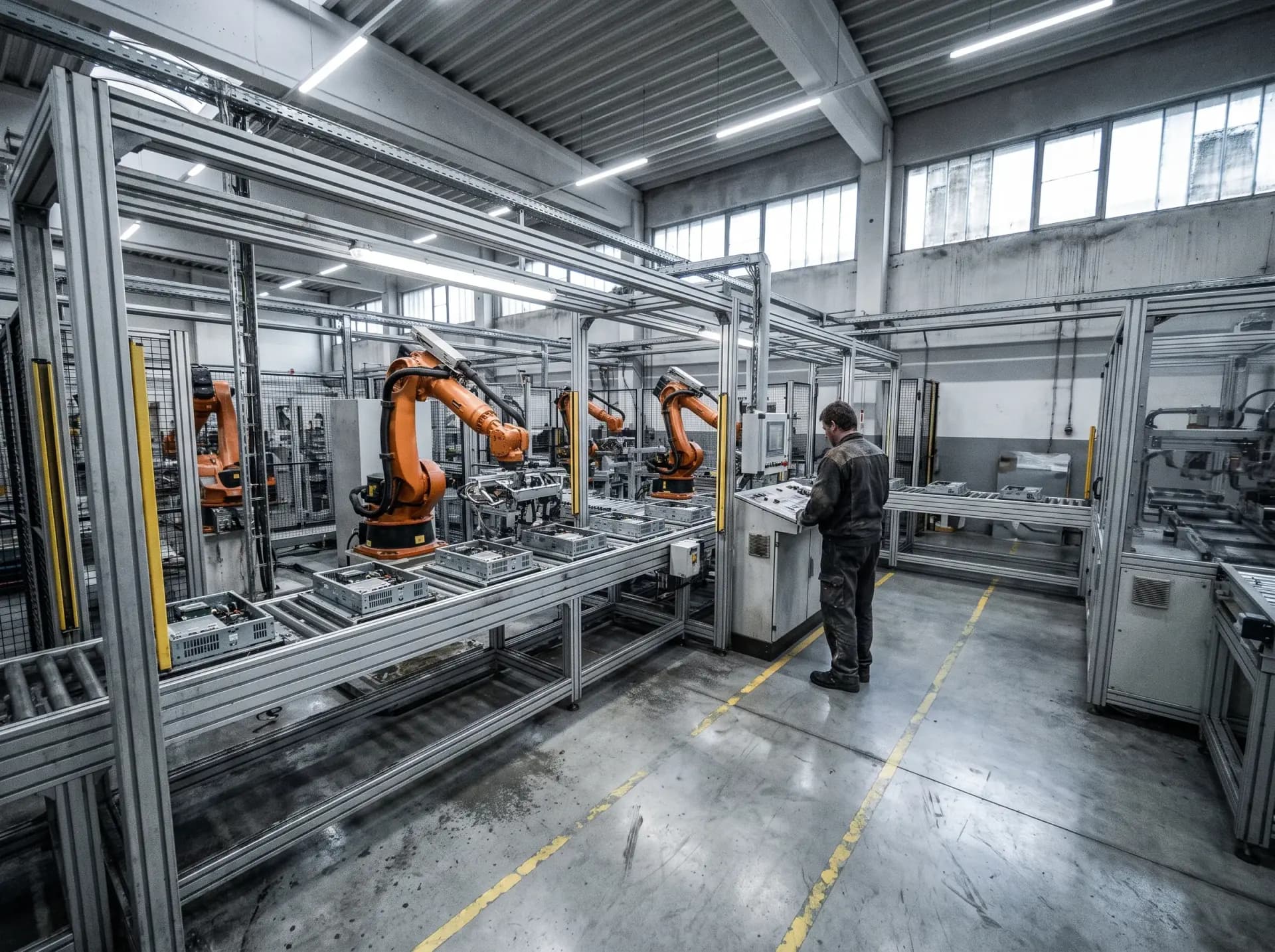
The redundant, safety-critical systems the specification cites: transportation, medical, industry.

Nearby architectures
Where it comes from and what it borders: the pages to compare.

Let's talk about your project
Phone and email go straight to our technical sales team in Turin: the first answer is already a technical one.