
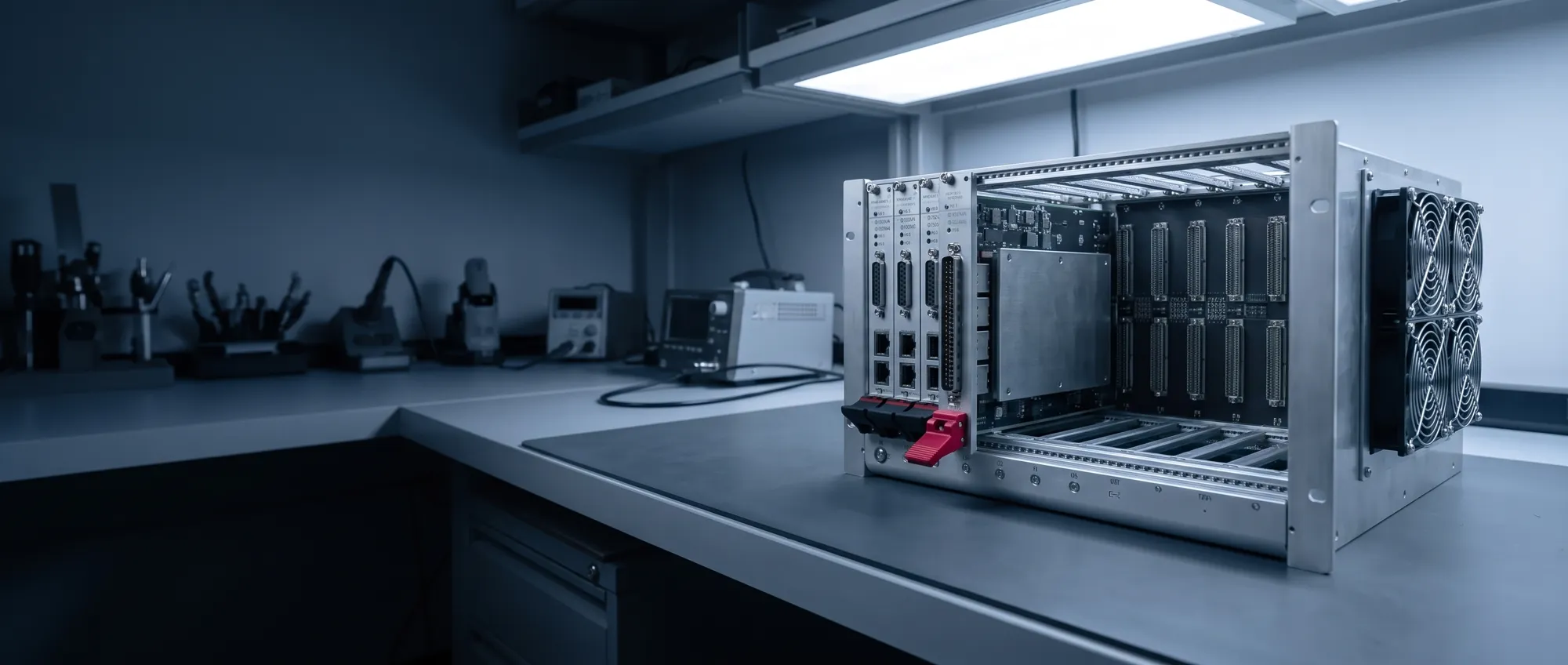
The AdvancedTCA architecture, explained
The most complex standard issued by PICMG, written by over one hundred companies for carrier-grade telecom equipment: high-density blades, redundant fabrics, shelf management. Here you find the system, the family and the catalog.
What AdvancedTCA is: carrier grade as a standard
AdvancedTCA is the PICMG standard born to define high-performance systems for carrier-grade telecom equipment: written with contributions from over one hundred companies, it is the most complex of the family.
The architecture revolves around high-density vertical blades in 19″ shelves, with redundant -48 VDC power, managed cooling and a shelf manager supervising every element via IPMI. Data travels on switched serial fabrics — in dual star or full mesh topology — and specialized I/O arrives with AMC mezzanines, the same ones MicroTCA uses as mini-blades.
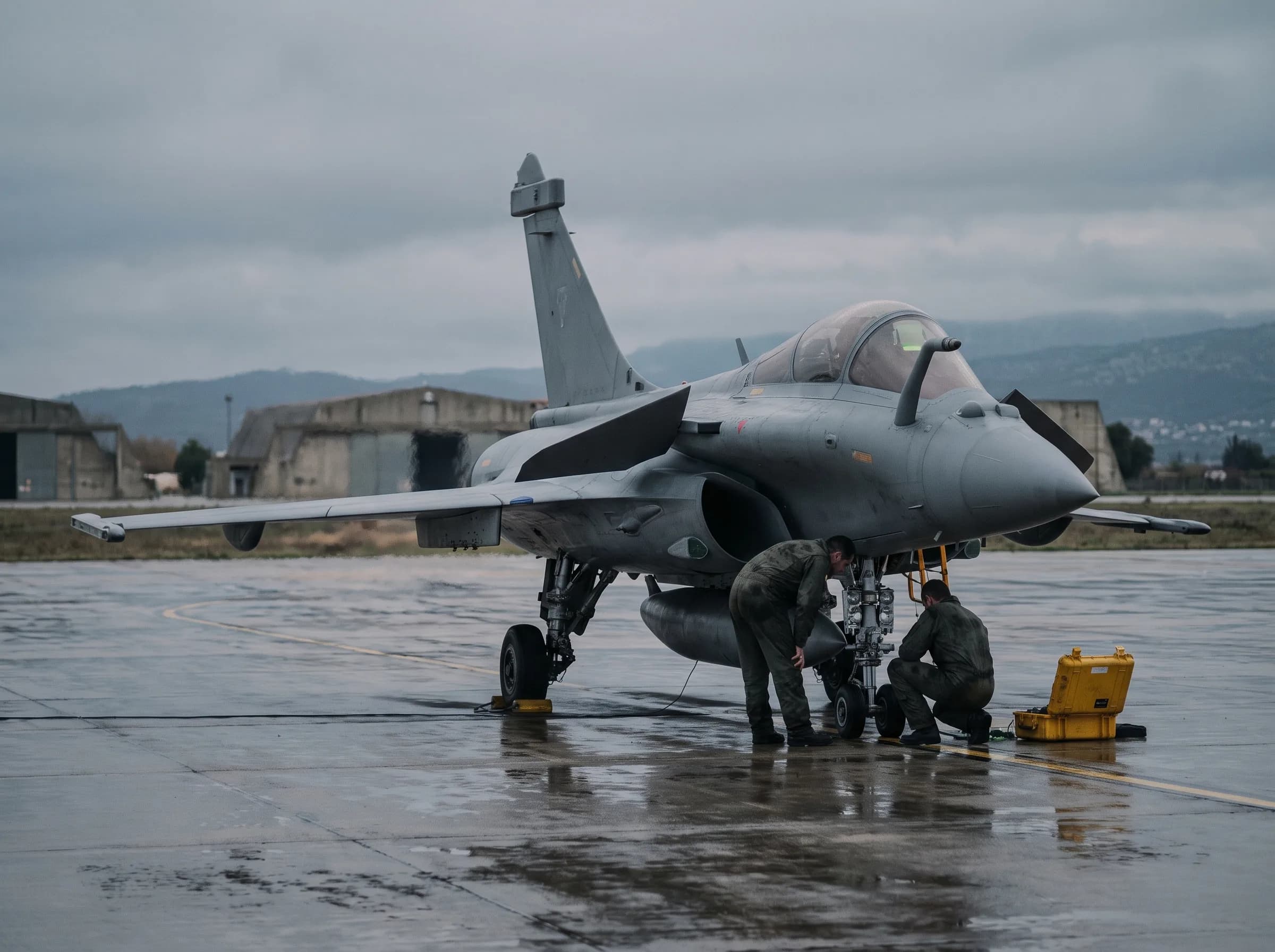
Thanks to its high interconnection speed, the most advanced processors and specification-level reliability, AdvancedTCA has expanded its application potential beyond telecom: today it is a technology particularly suitable for naval, aerospace and defense installations as well.
The service: custom platforms and microracks How the engineering team works
What the specification says
The family, item by item
The base, the Ethernet fabric and the mezzanine that joins two worlds.3 entries
PICMG 3.0
The base specification
Shelf mechanics, blades and connection zones, redundant power, cooling and management: everything carrier-grade availability needs — hot maintenance included — is inside the specification, not left to the integrator.
PICMG 3.1
Ethernet/Fibre Channel fabric
It maps Ethernet (and Fibre Channel) onto the PICMG 3.0 fabric: the most travelled road, with dedicated switch blades and links that today reach tens of gigabits.
AMC
The shared mezzanine
CPUs, storage, graphics, networking and I/O arrive on carrier blades as Advanced Mezzanine Cards: the same AMCs move unmodified to MicroTCA — one ecosystem, two system sizes.
Where AdvancedTCA works
The telecom world that wrote it and the markets that adopted it later.
Nearby architectures
The compact sibling, the PICMG family and the rugged alternative.
Let's talk about your project
Phone and email go straight to our technical sales team in Turin: the first answer is already a technical one.