
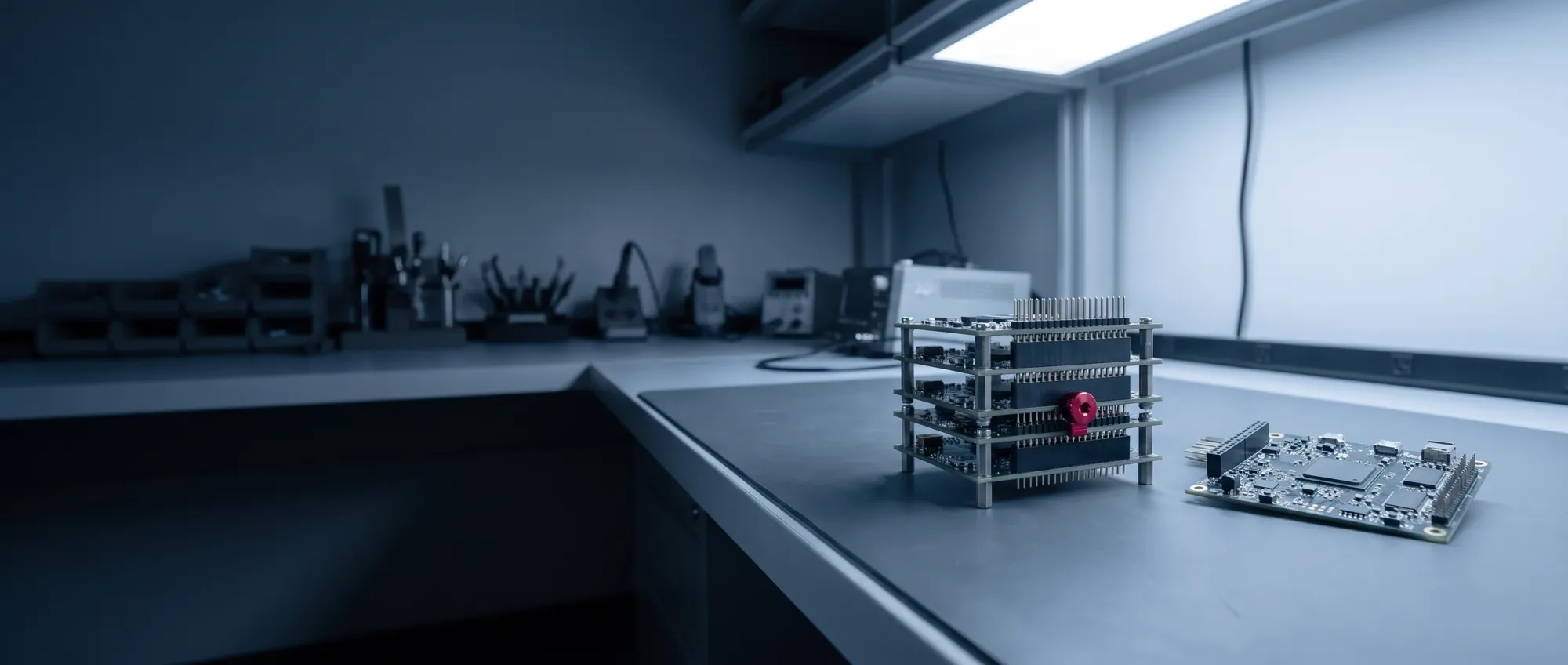
The PC/104 architecture, explained
The embedded standards family that stacks boards like building blocks: 90×96 mm, no backplane, ISA, PCI and PCI Express buses through pass-through connectors. Here you find the five specifications and where the catalog starts.
What PC/104 is: the building-block computer
PC/104 is a family of embedded standards defining both form factor and buses: designed for environments that need a small, rugged computer, it mounts as a stack — with no backplane.
A PC/104 system — the "stack" — combines a CPU board, a power supply and the peripherals the application needs: data acquisition, GPS, wireless. Modules stack on standoffs with pass-through connectors, and interoperability across COTS manufacturers lets you compose the system board by board. Ruggedness comes from construction: mating bus connectors and corner mounting holes.
The format was devised at Ampro in 1987 and standardized by the PC/104 Consortium in 1992: 90×96 millimetres, smaller than a desktop motherboard. The name comes from the 104 pins of the original ISA bus; from there the family grew with PCI (PC/104-Plus, 1997) and PCI Express (PCI/104-Express and PCIe/104, 2008), always keeping the stacking logic.
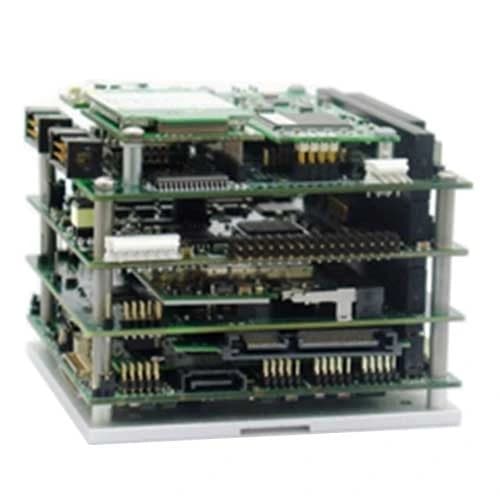
The service: PC/104-based SWaP systems How the engineering team works
What the specification says
The five specifications, item by item
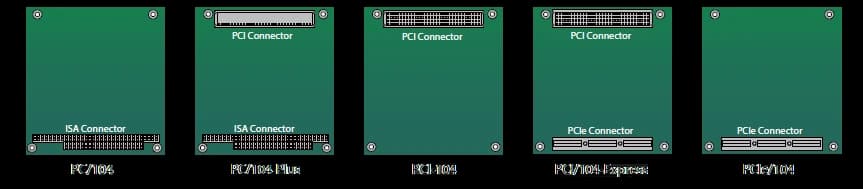
Same stack, different buses: each generation adds or removes a connector.5 entries
PC/104
1992 · ISA bus
The ISA bus in stacked form: same signals and timing, lower current, extra ground pins for integrity. Two versions: 8-bit (64 pins, like the XT) and 16-bit (104 pins, like the AT) — hence the name.
PC/104-Plus
1997 · ISA + PCI
It adds the 120-pin PCI connector opposite the ISA one: CPUs talk on both buses, Plus peripherals on PCI only. A Plus CPU accepts PC/104 peripherals; the reverse does not hold.
PCI-104
2003 · PCI only
It removes the ISA connector to free board area: compatible with PC/104-Plus (same PCI), incompatible with ISA-only peripherals.
PCI/104-Express
2008 · PCI + PCIe
It brings PCI Express into the stack with a 156-pin SMT connector in place of ISA, plus USB, SATA and LPC. Two pinouts: Type 1 (4× PCIe x1, 1× x16, USB 2.0) and Type 2 (adding 2× x4, USB 3.0, SATA, LPC) — on a mismatch the system stays in reset, with no damage.
PCIe/104
2008 · PCIe only
Like Express but without legacy PCI, to free board area: same connector position and same PCIe Types.
The generations, in a table
Thirty years of stacking, three buses.1 tables
The consortium's specifications
From the technical page's table.
| Specification | Initial release | Bus |
|---|---|---|
| PC/104 | 1992 | ISA (AT and XT) |
| PC/104-Plus | 1997 | ISA and PCI |
| PCI-104 | 2003 | PCI |
| PCI/104-Express · PCIe/104 | 2008 | PCI and PCI Express |
The PC/104 catalog starts here
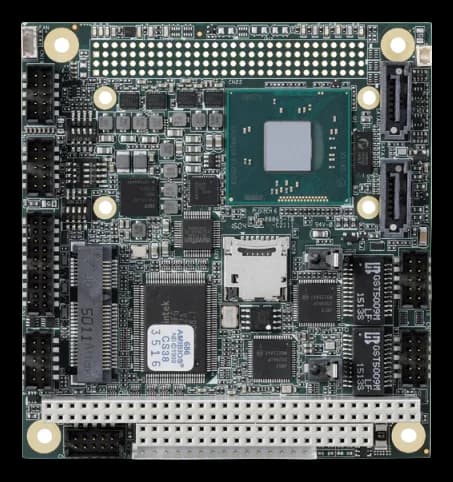
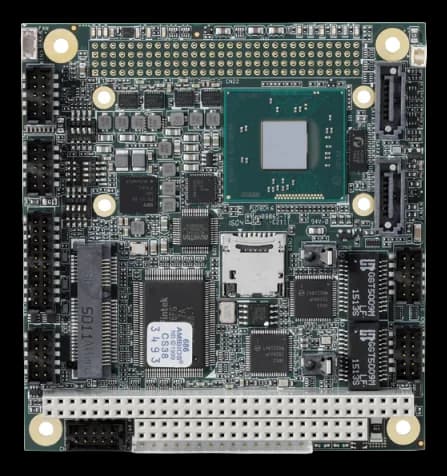
PC/104 boards
PC/104-Plus boards
PCI-104 boards
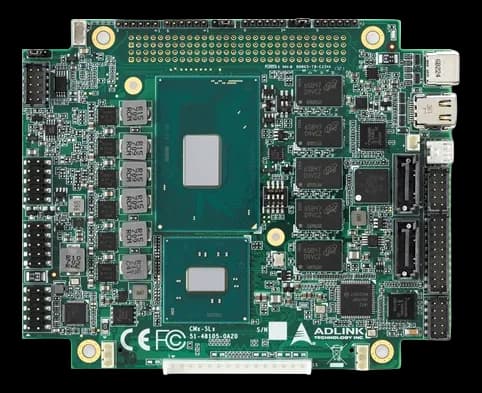
PCI/104-Express boards
Where PC/104 works
Specialized environments that need small size, ruggedness and long availability.
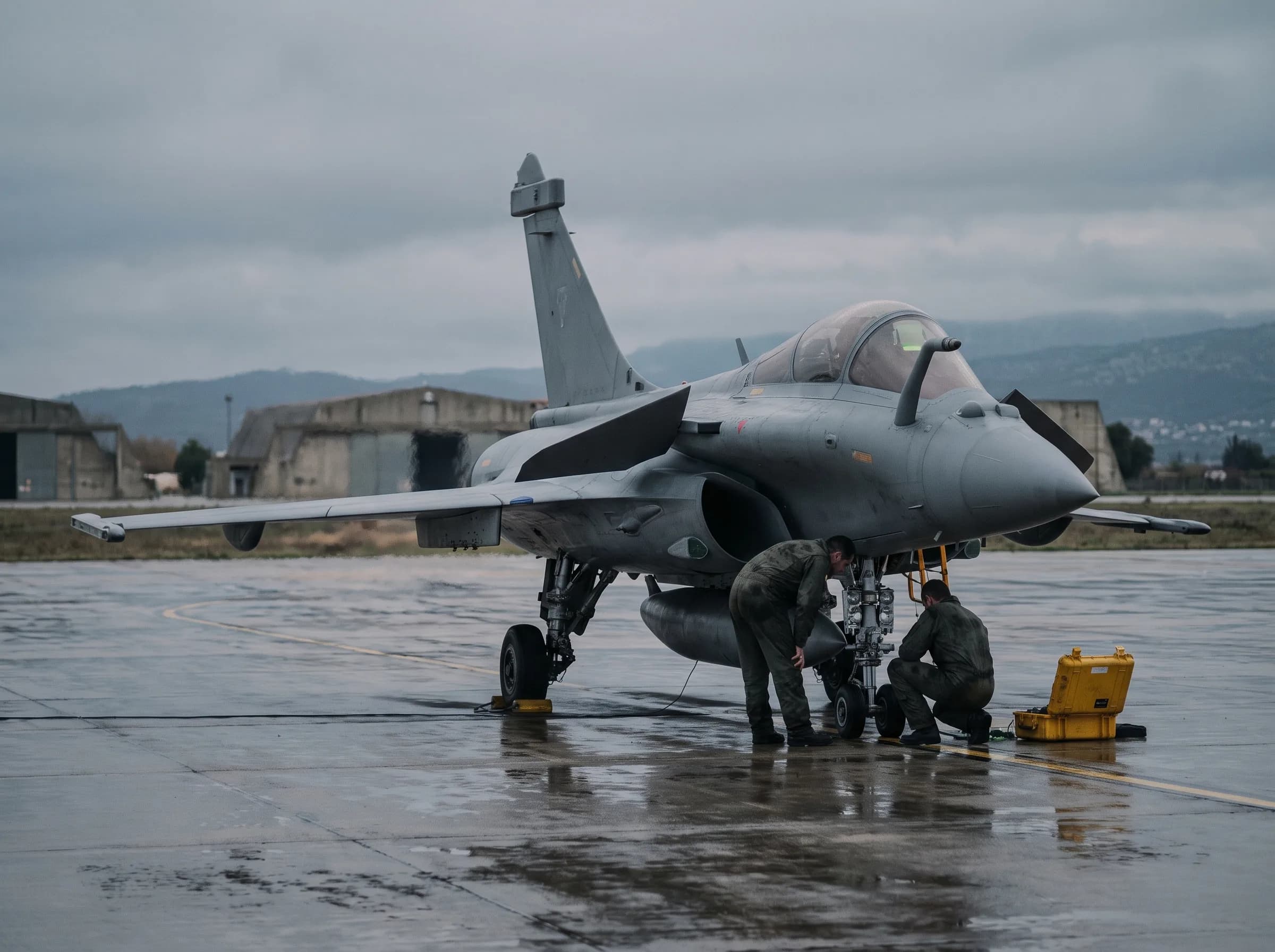
Aerospace & defense
Air, sea, land: avionics, bridge systems and qualified vehicle platforms.
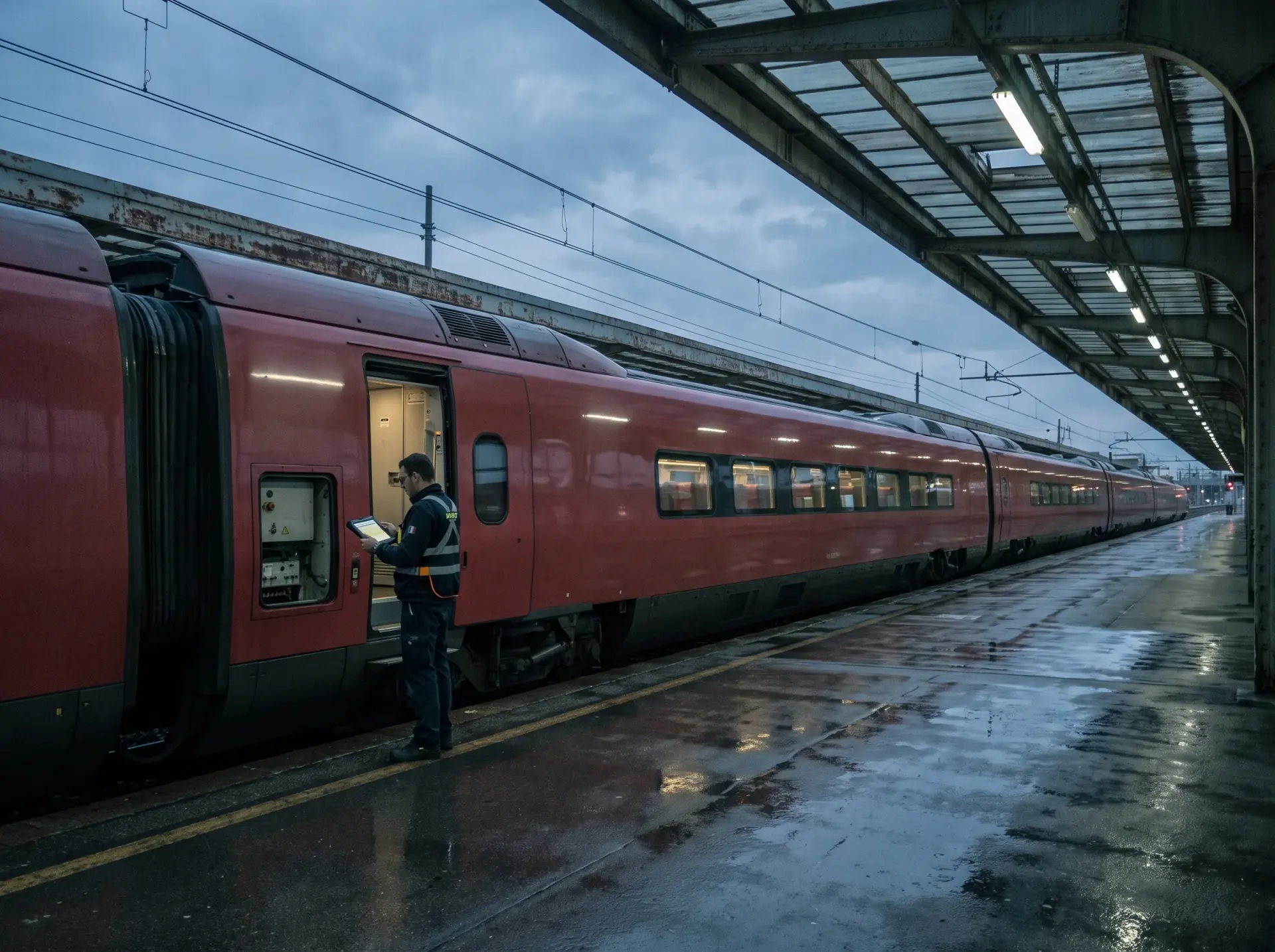
Transport & railway
Onboard train, signaling and vehicles.
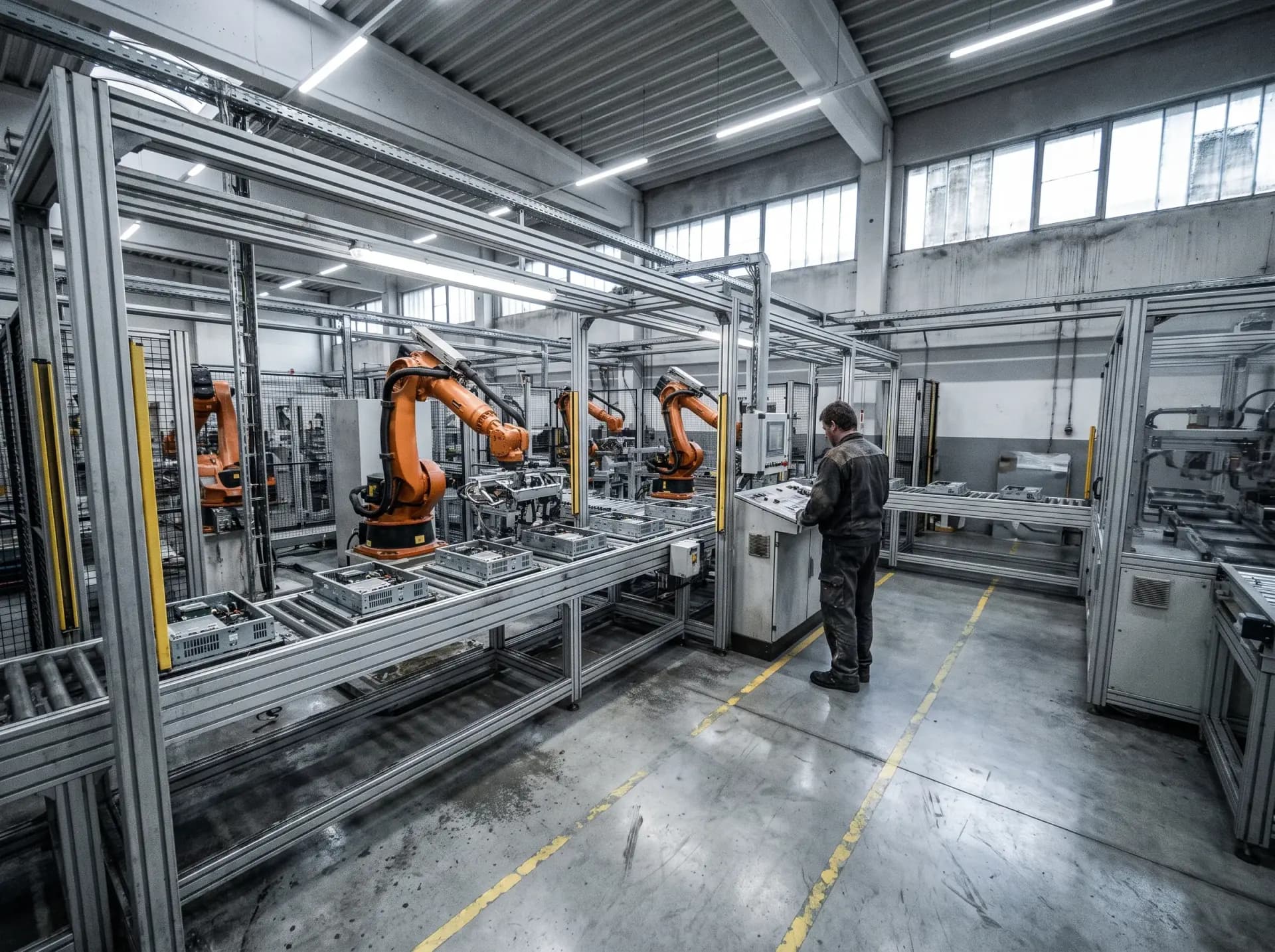
Industrial automation
Line control, robotic cells and machine-side HMIs.
3
markets served
Aerospace & defense, transport & railway, industrial automation: applications, references and qualifications.
All markets
Nearby architectures
The other ways of going small: COM modules and mezzanines.

Let's talk about your project
Phone and email go straight to our technical sales team in Turin: the first answer is already a technical one.