
The VPX and OpenVPX architecture, explained
VITA 46 replaces the parallel VME bus with high-speed serial links, on the same 3U and 6U Eurocard formats. Here you find the standard, the OpenVPX vocabulary and where the catalog starts.
What VPX is: VME beyond the bandwidth limit
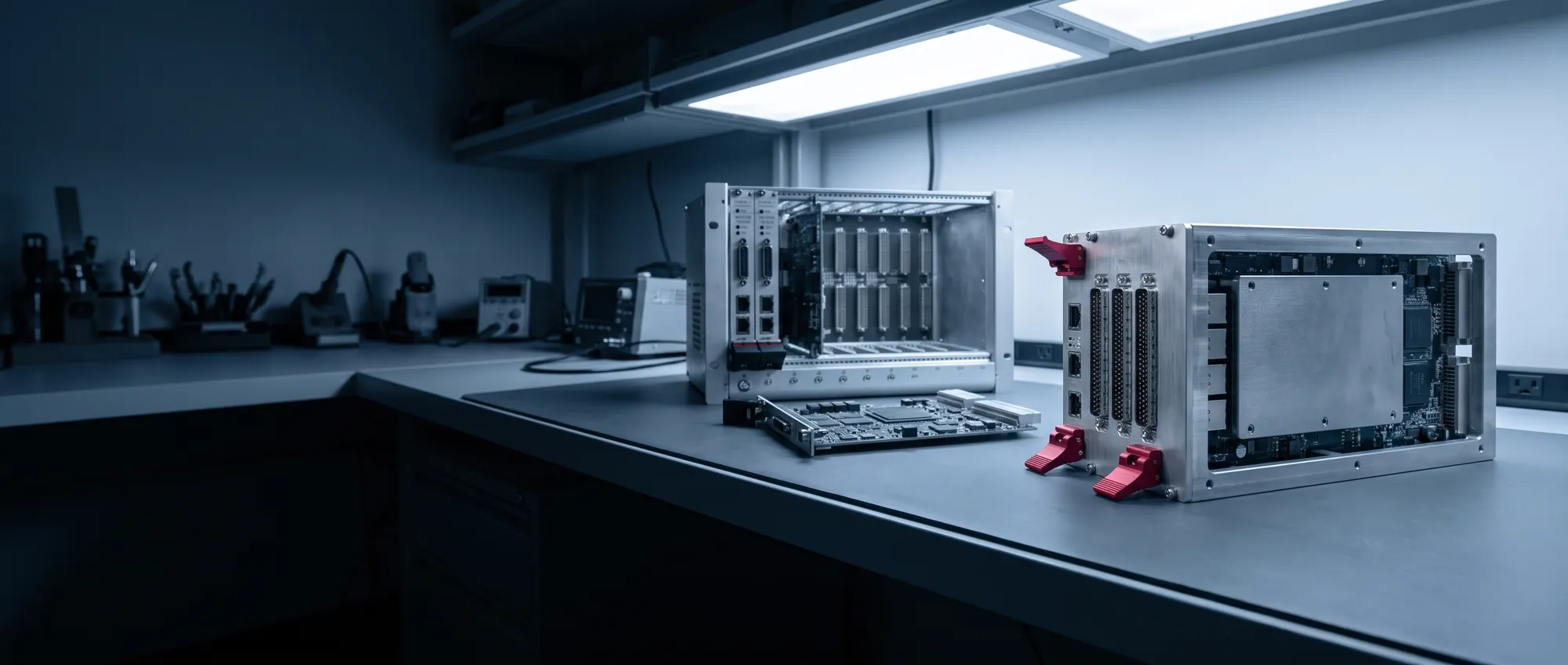
OpenVPX is an evolution of the VME specifications: it keeps the 3U and 6U Eurocard formats, introduces serial links and increases signal density, backplane data throughput and available power per slot.
After years of VME systems at the core of military and aerospace programs, the parallel bus had reached the limit of available bandwidth. VPX — the VITA 46 standard — replaces it with high-speed serial buses: much as the desktop market moved from PCI to PCIe, VME transformed to embrace the new specifications. Serial links deliver higher data rates using a fraction of the routing resources, freeing the backplane for more power and more user I/O.
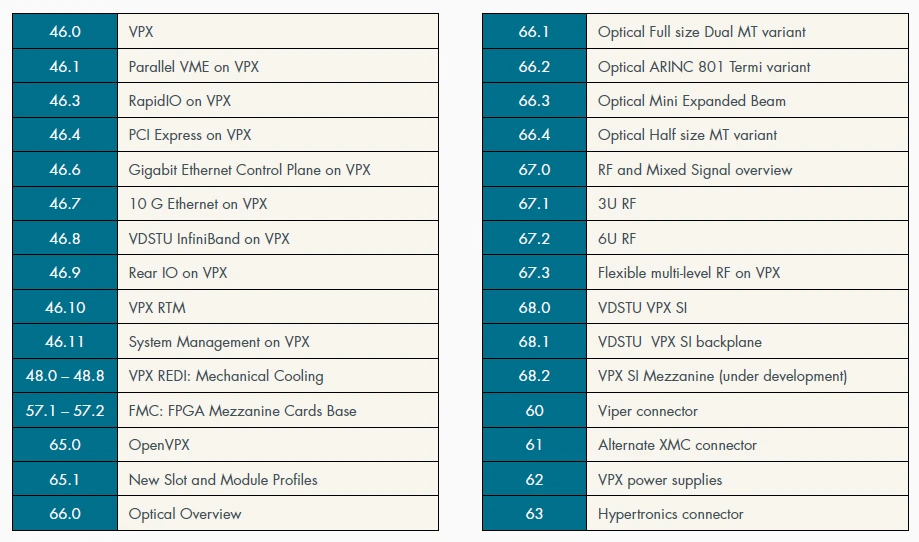
The standard is maintained by the VITA Standards Organization, an ANSI-accredited group, as a family of specifications: VITA 46.x for the mechanical and electrical base, VITA 48.x for ruggedization, VITA 65 for interoperability. It is the reference architecture for compact rugged embedded systems: high computing density, small footprints, operation in critical conditions.
The service: custom platforms and microracks How the engineering team works
What the specification says
The VITA family, item by item
Three specifications and one alignment initiative: each solves a specific problem.4 entries
VITA 46.0
The mechanical and electrical base · 2007
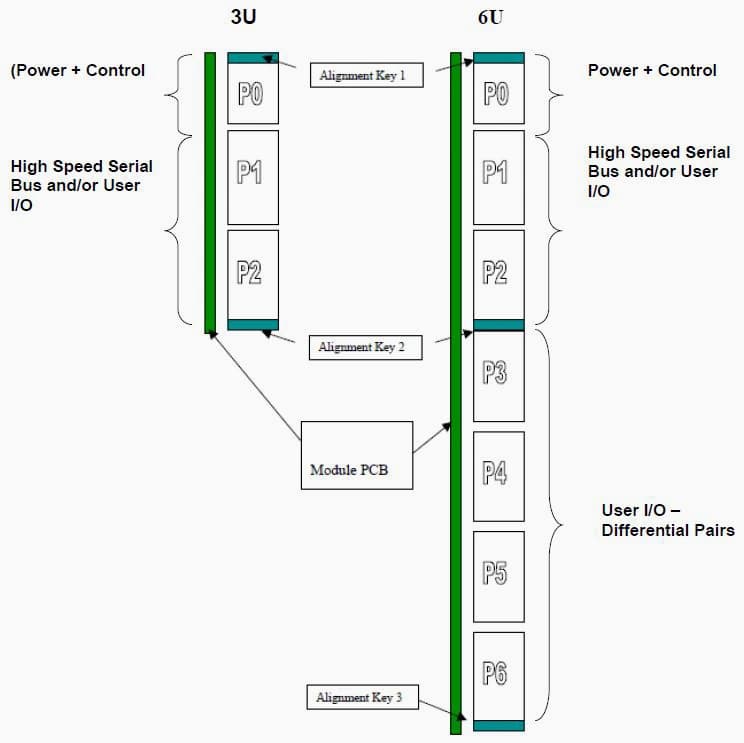
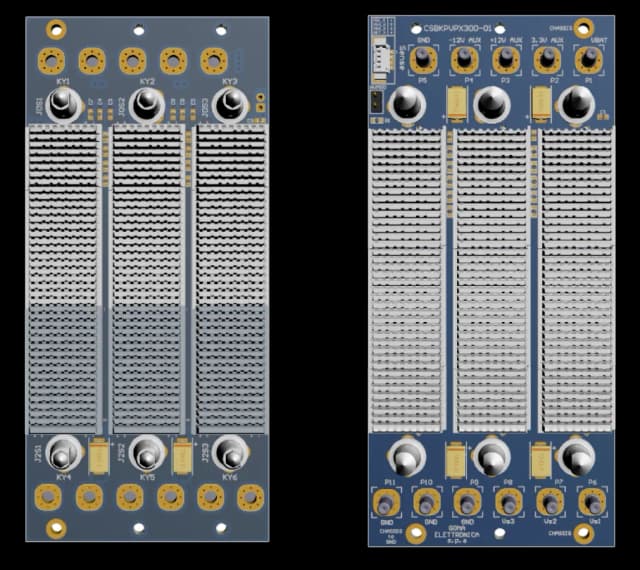
It defines the mechanical and electrical base: 3U and 6U form factors, MultiGIG RT connectors for serial buses beyond 10 Gbps, three connectors on 3U (P0–P2) and seven on 6U (P0–P6). P0 is reserved for power and system control signals; the remaining pins are user I/O, routed to the Rear Transition Module, additional storage or backup lines.
VITA 48 · REDI
Ruggedized Enhanced Design Implementation
It defines the mechanical interface between chassis and modules: it extends the pitch from 0.8″ to 0.85″ and 1.0″, adds cover plates for ESD protection and level-2 maintenance — the field-replaceable module — and standardizes cooling: 48.1 for air, 48.2 for conduction. Consistent mechanical plates simplify conduction-cooled chassis design.
VITA 65 · OpenVPX
The system profiles
OpenVPX brings order: it defines profiles that physically map resources between backplane and plug-in modules, so compatibility is verified before integration, not after. It introduces the ecosystem's shared vocabulary: pipes for groups of differential pairs, module types for functions.
SOSA
Sensor Open Systems Architecture
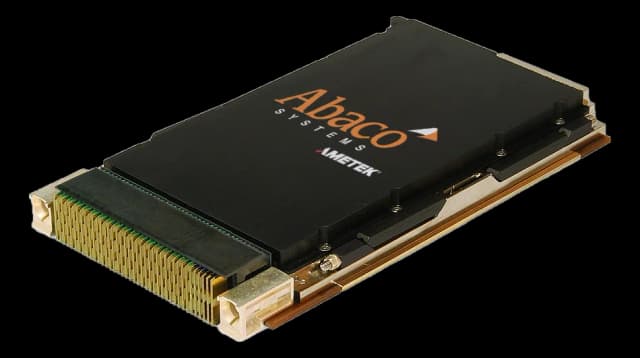
SOSA alignment brings the open-standards approach of defense programs to OpenVPX modules: interoperability and modularity declared, not promised. The most recent single board computers and GPGPUs in the catalog arrive already SOSA-aligned.
The OpenVPX vocabulary
The three concepts that make a profile readable: pipes, module types, cooling.3 tables
Pipes
Groups of differential pairs, regardless of protocol.
| Pipe | Diff. pairs | Example |
|---|---|---|
| Ultra-Thin (U) | 2 | ×1 PCIe · 1× Serial RapidIO |
| Thin (T) | 4 | ×2 PCIe · 1000BASE-T |
| Fat (F) | 8 | ×4 PCIe · 10GBASE-KX4 |
| Double Fat (D) | 16 | ×8 PCIe |
Module types
The functions VITA 65 recognizes inside a system.
| Module | Role |
|---|---|
| Payload (PAY) | The application's processing: the single board computer. |
| Peripheral (PER) | An I/O module: it requires a payload to function. |
| Storage (STO) | The system's disk function. |
| Switch (SWH) | The switch fabric: from one upstream port to multiple downstream ports. |
| Bridge | A switch that changes protocols, for example from PCIe to 1000BASE-T. |
Cooling
The method determines pitch, I/O and compatible chassis (VITA 48).
| Method | Pitch | What changes |
|---|---|---|
| Air (VITA 48.1) | 0.80″ | Standard VITA 46 board: front I/O, fits all VPX chassis. |
| Conduction (VITA 48.2) | 0.85″ | Top conduction plate: rear I/O only, fits most chassis. |
| Conduction REDI | 1.00″ | Cover plates on both sides, no exposed components (ESD), level-2 maintenance: VITA 48.2 chassis. |
Where VPX works
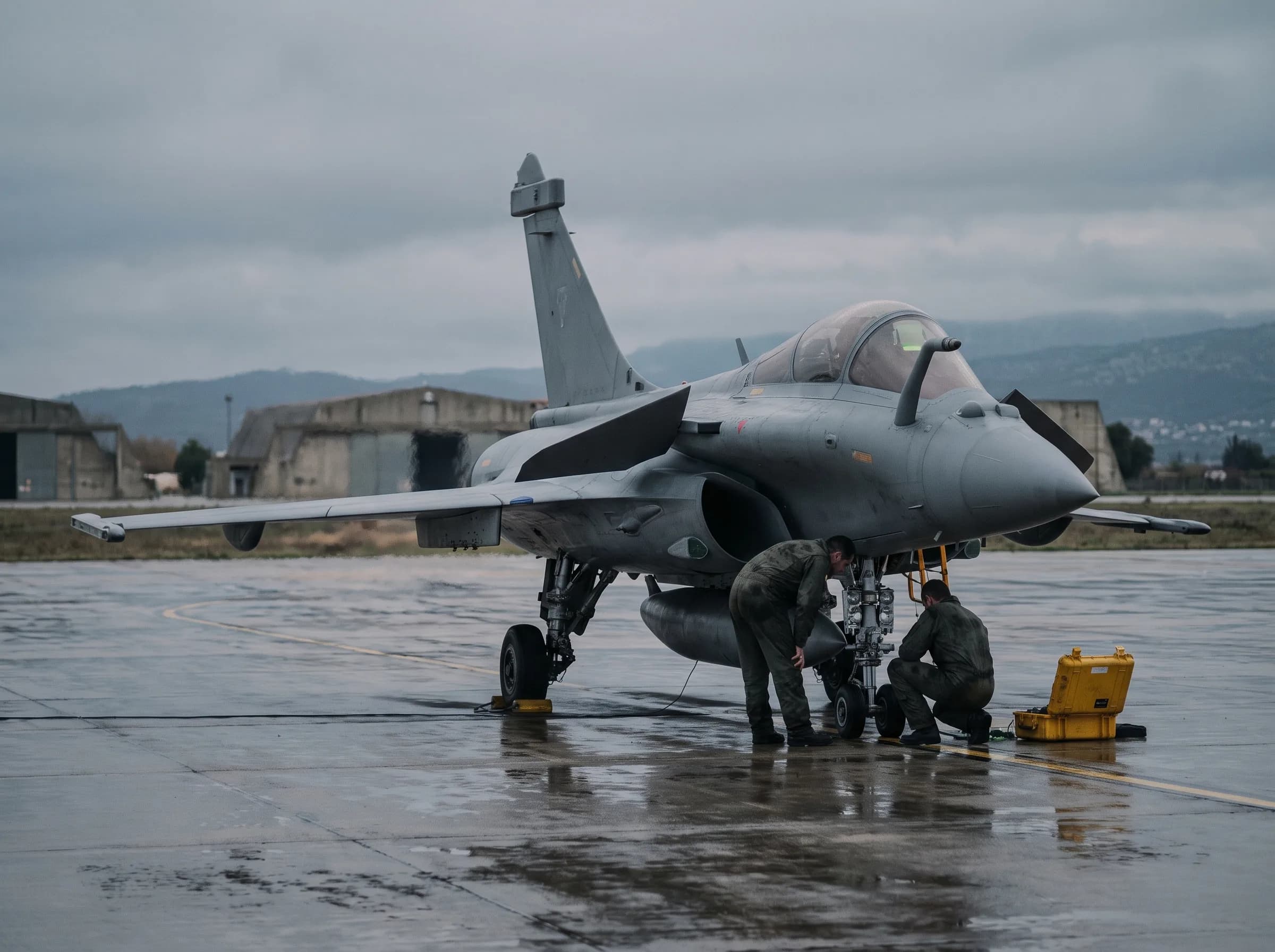
Born for military and aerospace programs: where bandwidth and operating conditions allow no compromise.
Nearby architectures
Where it comes from and what it borders: the pages to compare.
Let's talk about your project
Phone and email go straight to our technical sales team in Turin: the first answer is already a technical one.